Spring lawn care starts now—literally.
If spring felt “around the corner” a few weeks ago, the reality is that spring is already here, and your lawn is waking up whether you are ready or not.
For homeowners and property managers across Lancaster County, PA, this season is not about rushing through chores.
Spring lawn care is a reset, a chance to repair winter stress, re-energize the soil, and set your turf up for success through summer.
There is also something uniquely rewarding about it.
You spend time outdoors, reconnect with the soil beneath your feet, and do something that benefits your entire household.
At its core, spring lawn care is equal parts science and satisfaction—and when done correctly, it puts a smile on your face every time you look out the window.
Every successful lawn begins with preparation. Think of spring lawn care like a work of art: before adding nutrients or seed, you must prepare the canvas.
Winter leaves behind debris—fallen branches, compacted leaves, dead grass, and organic buildup.
These materials block sunlight, trap moisture, and create the perfect environment for pests and disease.
Thatch is a layer of dead organic matter that accumulates between the soil surface and living grass blades. A thin thatch layer can be beneficial, but once it exceeds 1 inch, it becomes harmful.
Excess thatch:
Did your lawn see a ton of activity over the last year?
BBQs, parties, snowmen, sledding, pets running the yard, kids running all around?
If so, soil compaction is almost guaranteed.
Spring lawn care must address compaction early – ideally the previous fall.
If you have missed last fall aeration and your lawn is extremely compacted, then go for lawn aeration during spring or if you can wait the following fall.
Remember that a compacted soil blocks three essentials your grass needs:
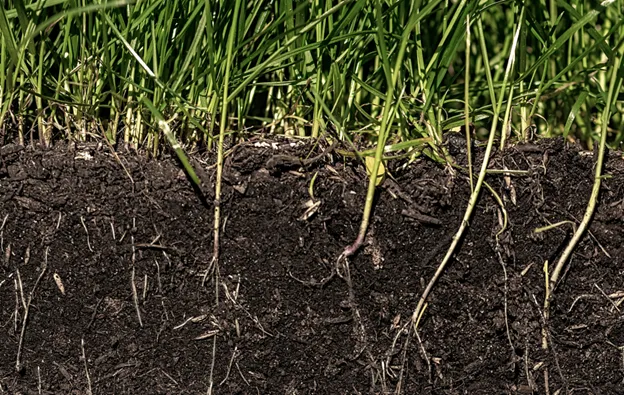
Grass roots are living systems. When soil pores collapse under pressure, root growth slows, water runs off instead of soaking in, and fertilizers become less effective.
You may feel ready to fertilize at this point—but pause.
One of the biggest mistakes in spring lawn care is applying fertilizer without understanding the soil beneath the grass.
Fertilization is not guesswork.
It is science.
In Lancaster County, soil composition varies widely due to agriculture, development, and natural geology.
That means spring lawn care must be tailored—not generic
Your soil test will focus on three primary nutrients:
Drives green color and blade growth
Supports root development and energy transfer
Enhances stress tolerance and disease resistance
Nitrogen is especially powerful. It fuels chlorophyll production, which allows grass to photosynthesize and recover quickly from winter dormancy.
But too much nitrogen can weaken roots and promote disease—another reason soil testing is essential.
Once you understand your soil results, fertilization becomes precise rather than reactive.
Effective spring lawn care uses the right product, at the right rate, at the right time.
Early spring fertilization should encourage steady growth, not explosive top growth that stresses the plant.
A balanced approach improves root depth, color consistency, and long-term turf resilience.
Spring weather in Lancaster County often includes rain, fluctuating temperatures, and periods of saturation.
That makes water management an underrated part of spring lawn care.
Key considerations:
Spring weeds germinate early, often before homeowners notice them. A proactive spring lawn care plan focuses on prevention rather than reaction.
Healthy turf is the best defense.
Dense grass naturally crowds out weeds, reducing the need for aggressive chemical controls later in the season.
When necessary:
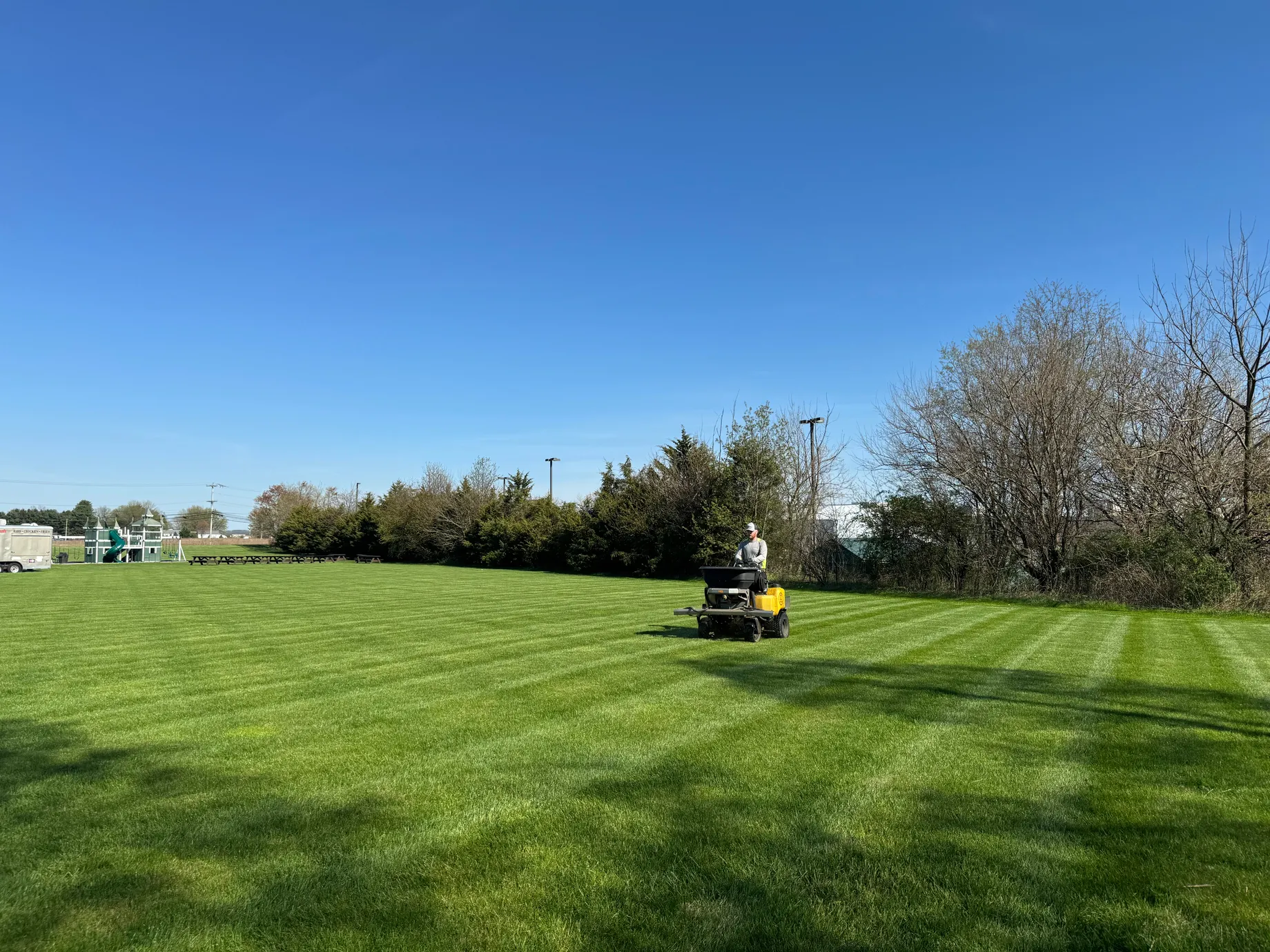
Mowing may seem routine, but it directly influences the success of spring lawn care.
Spring mowing guidelines:
After winter dormancy, spring lawn care is about revival, balance, and preparation. When done correctly, it sets the stage for a lawn that performs well all year.
Yes. Dense, healthy turf created through proper spring lawn care crowds out weeds and reduces reliance on herbicides.